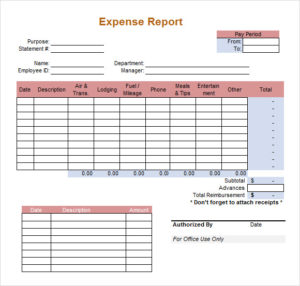
Managing business travel expenses can be a complex task, but a well-structured Per Diem Expense Report Template is an invaluable tool for simplifying the process. For employees who travel, it eliminates the tedious chore of collecting and submitting dozens of receipts for meals and minor expenses. For employers, it streamlines the reimbursement process, ensures compliance with company policy, and makes budget forecasting more predictable. This standardized approach provides a clear framework for tracking daily allowances, ensuring both fairness for the employee and accountability for the company.
At its core, "per diem" is a Latin phrase meaning "for each day." In the context of business, it refers to a fixed daily allowance an organization provides to an employee to cover living expenses incurred while traveling for work. This allowance typically covers lodging, meals, and incidental expenses (M&IE). Instead of reimbursing the actual cost of every single meal or taxi ride, the company provides a set amount of money per day, simplifying the entire expense management lifecycle. This method is widely adopted for its efficiency and is recognized by tax authorities like the IRS, which sets guidelines for non-taxable reimbursement rates.
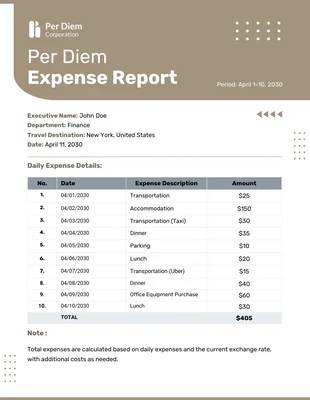
The true power of using a per diem system is realized through a consistent and easy-to-use reporting format. Without a template, employees might submit expenses in various formats, leading to confusion, delays, and a significant administrative burden on accounting departments. A standardized template ensures that all necessary information—such as travel dates, destinations, applicable rates, and final calculations—is presented in a uniform way. This not only accelerates the approval and reimbursement process but also creates a clean, auditable record for financial and tax purposes.
This guide will walk you through everything you need to know about per diem expense reporting. We will delve into the fundamental components of an effective template, explain how to correctly calculate daily allowances, and outline the significant benefits for both employees and employers. Whether you are building a template from scratch or looking to refine your existing process, you will gain the insights needed to manage travel reimbursements with greater accuracy and efficiency.
Understanding Per Diem: A Foundation for Accurate Reporting
Before you can effectively use or create a per diem expense report, it's crucial to understand the underlying concepts. A solid grasp of what per diem is, how rates are set, and how it differs from other reimbursement methods is essential for ensuring compliance and accuracy.
What is Per Diem?
Per diem is a fixed, pre-established daily allowance paid to employees to cover expenses incurred during business travel. The primary purpose of this allowance is to handle costs for lodging, meals, and incidental expenses. Incidental expenses are the small costs that are often difficult to track, such as tips for hotel staff, laundry services, or transportation between a hotel and a restaurant. By providing a flat rate, companies relieve employees of the burden of saving every small receipt while giving finance teams a predictable cost to manage.

The per diem amount is not arbitrary. It is carefully calculated to reflect the average cost of living in a particular travel destination. This means an employee traveling to a high-cost city like New York or San Francisco will receive a higher daily allowance than someone traveling to a less expensive rural area.
How are Per Diem Rates Determined?
For businesses operating in the United States, per diem rates are primarily established by the U.S. General Services Administration (GSA). The GSA publishes annual rates for destinations within the continental United States (CONUS). These rates are the standard reference for federal employees and are widely adopted by private companies as a benchmark for what is considered a reasonable, non-taxable reimbursement amount by the IRS.
The GSA provides a breakdown for each location, typically splitting the per diem into two main categories:
1. Lodging: The maximum amount an employee can be reimbursed for their hotel or accommodation.
2. Meals & Incidental Expenses (M&IE): A fixed daily rate to cover food, drinks, tips, and other minor costs.
For international travel, the U.S. Department of State sets the official per diem rates. Companies can choose to adopt these official rates or establish their own internal per diem policy. However, if a company's rate exceeds the federal guidelines, the excess amount may be considered taxable income for the employee.
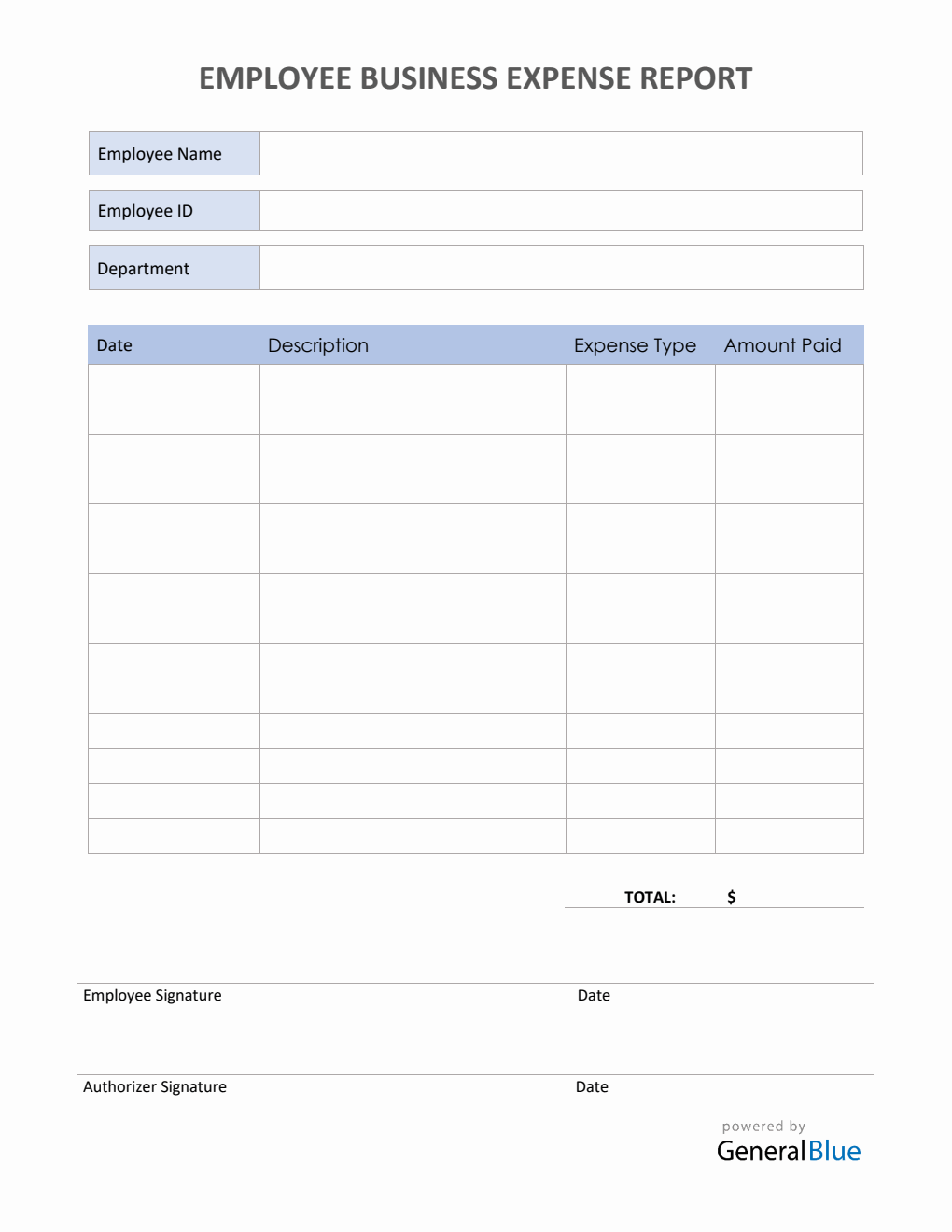
Per Diem vs. Actual Expense Reimbursement
The primary alternative to the per diem method is actual expense reimbursement. It's important to understand the distinction between these two approaches.
With actual expense reimbursement, employees are required to submit receipts for every single business-related expense. The company then repays them for the exact amount spent, provided the expenses fall within company policy (e.g., a price limit on dinner). This method is highly precise but can be administratively heavy. It requires employees to meticulously track every purchase and finance teams to review and process a large volume of individual receipts.
In contrast, the per diem method is built on simplicity. The employee receives a flat daily rate and generally does not need to submit receipts for meals or incidental purchases. The primary documentation required is proof of travel, such as a hotel bill or flight itinerary. This approach significantly reduces paperwork and speeds up the reimbursement cycle. The trade-off is a potential lack of precision; an employee might spend more or less than the daily allowance, but the reimbursement amount remains the same.
Key Components of an Effective Per Diem Expense Report Template
A well-designed template is clear, comprehensive, and intuitive. It should guide the user to provide all necessary information without causing confusion. Whether you're using a spreadsheet or a dedicated software form, these core components are essential for a functional and compliant report.
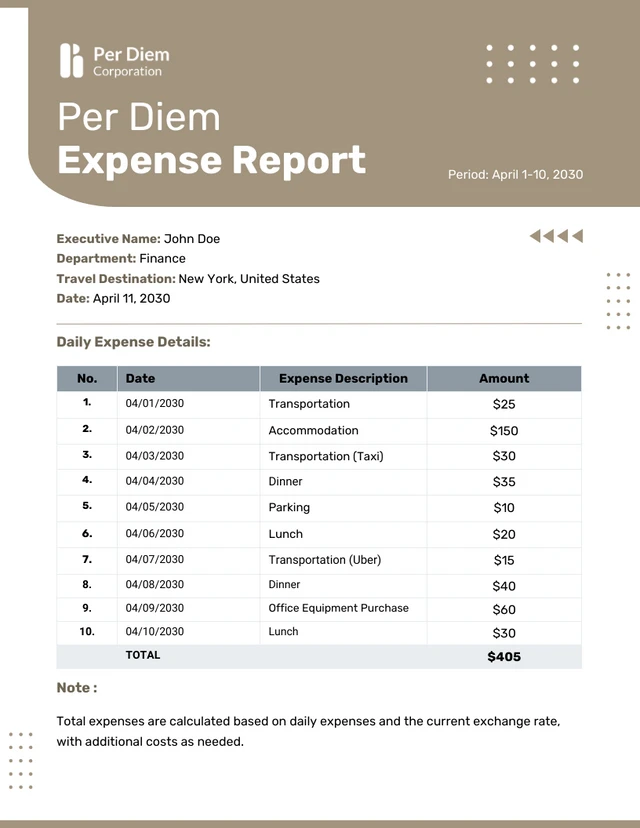
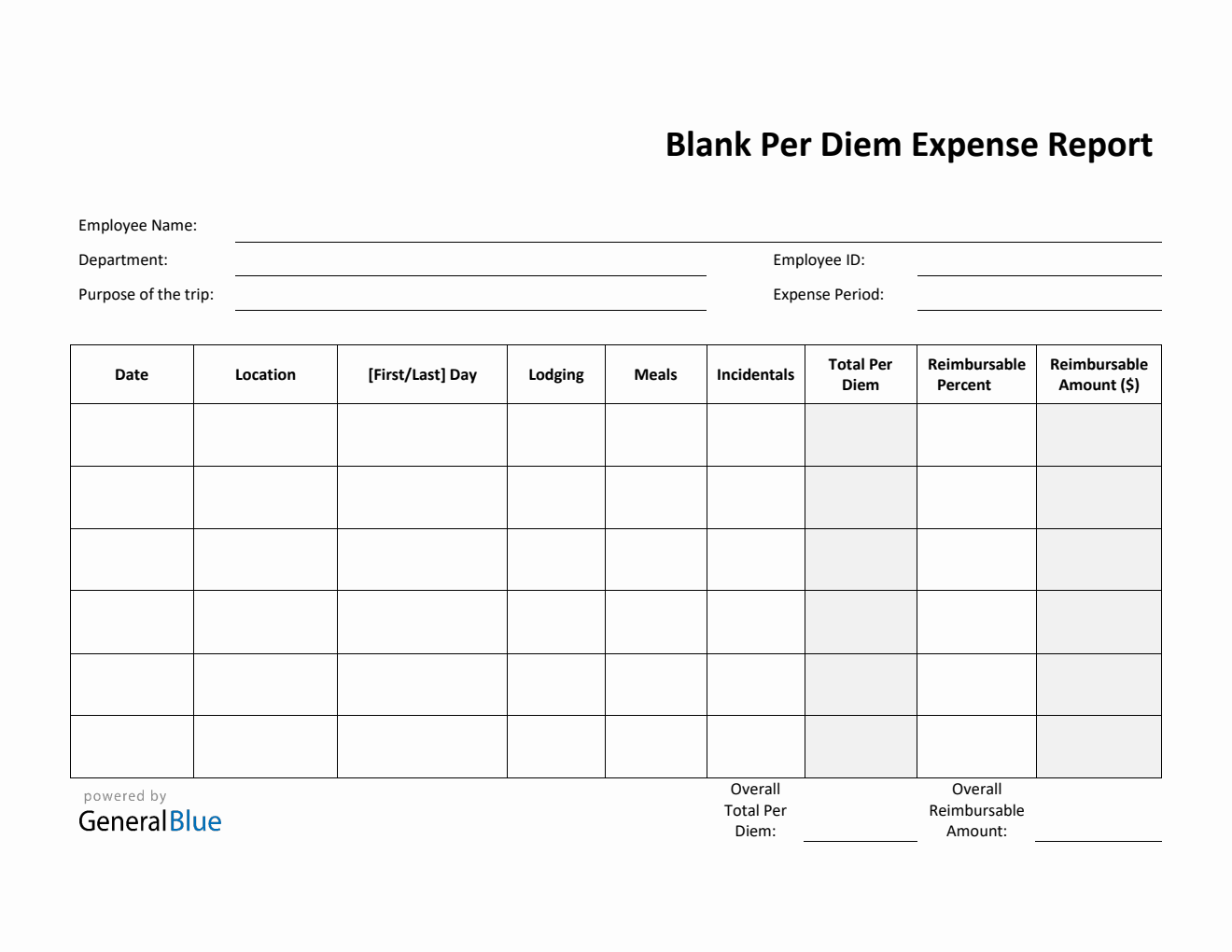
Employee and Trip Information
This section is the foundation of the report and captures the "who, what, where, and when" of the business trip. It should be located at the top of the form for easy identification.
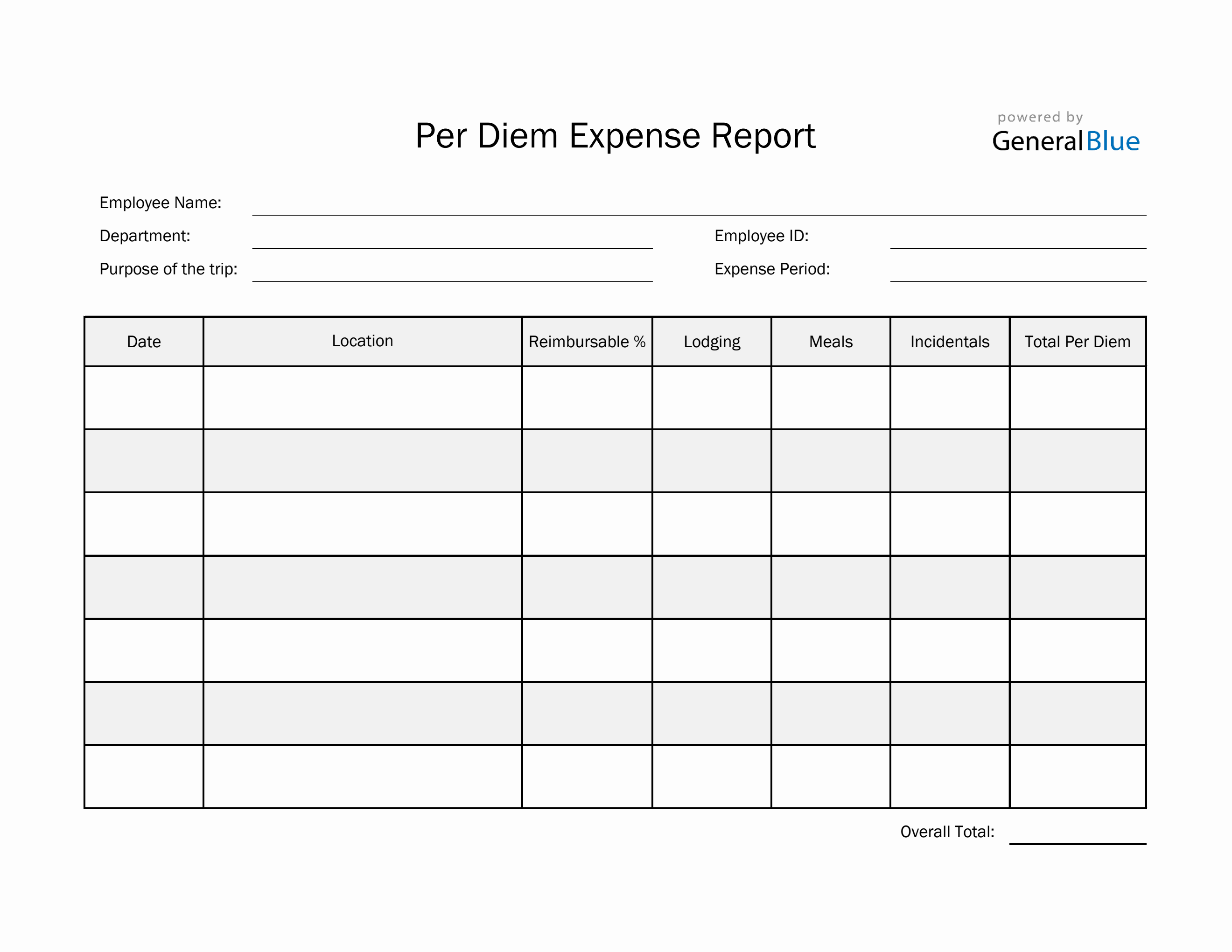
- Employee Details: Full Name, Employee ID, Department, and Job Title.
- Trip Details: A concise and clear Purpose of Trip (e.g., "Client Meeting with XYZ Corp" or "Annual Tech Conference").
- Travel Dates: The official Start Date and End Date of the trip. It's also helpful to include the Departure Time and Return Time, as this is crucial for calculating partial day allowances.
- Destination(s): The city, state, and country for each leg of the journey. This is vital for looking up the correct per diem rates.
Daily Expense Breakdown
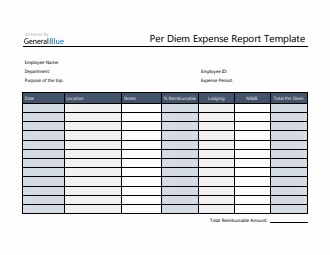
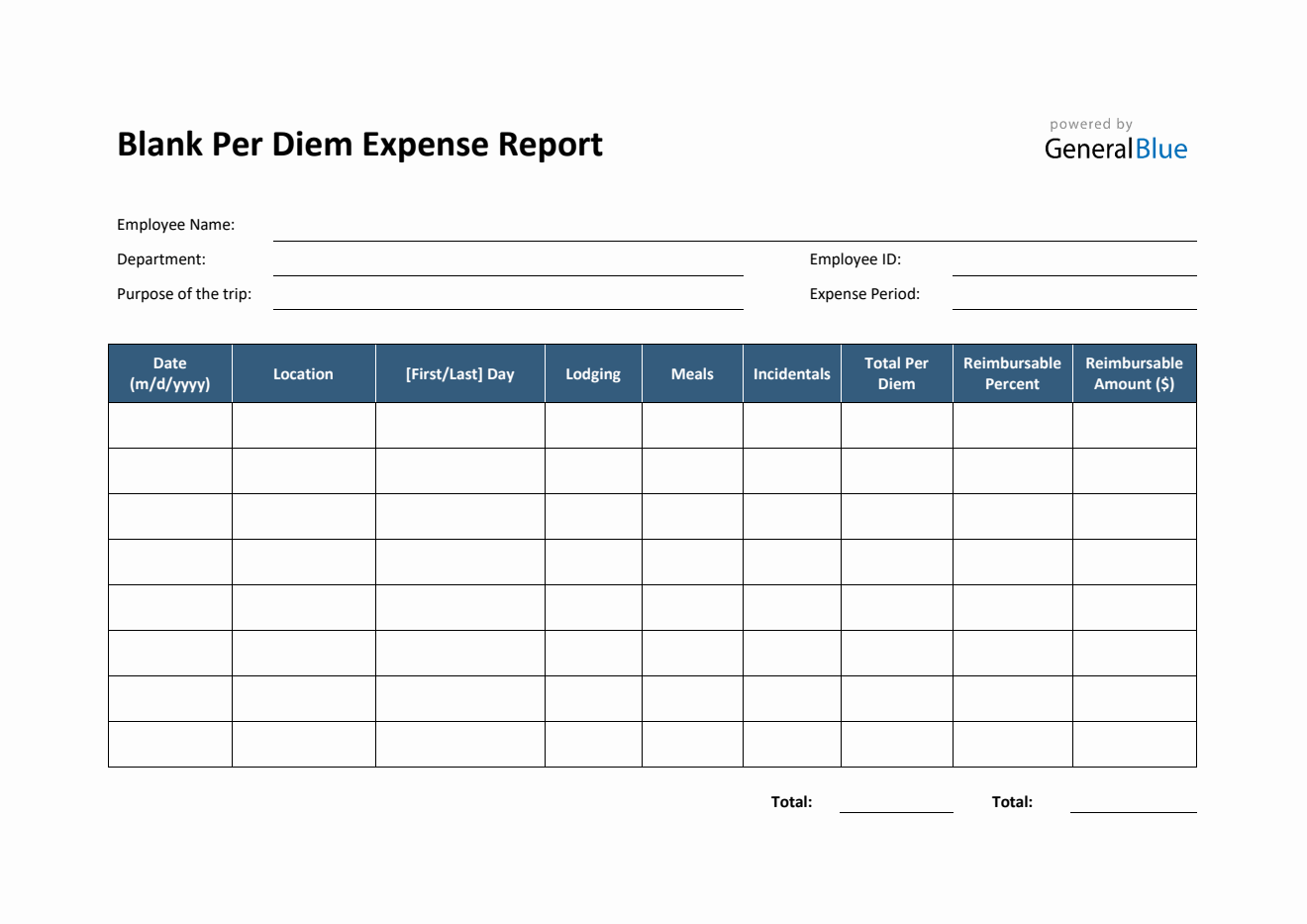
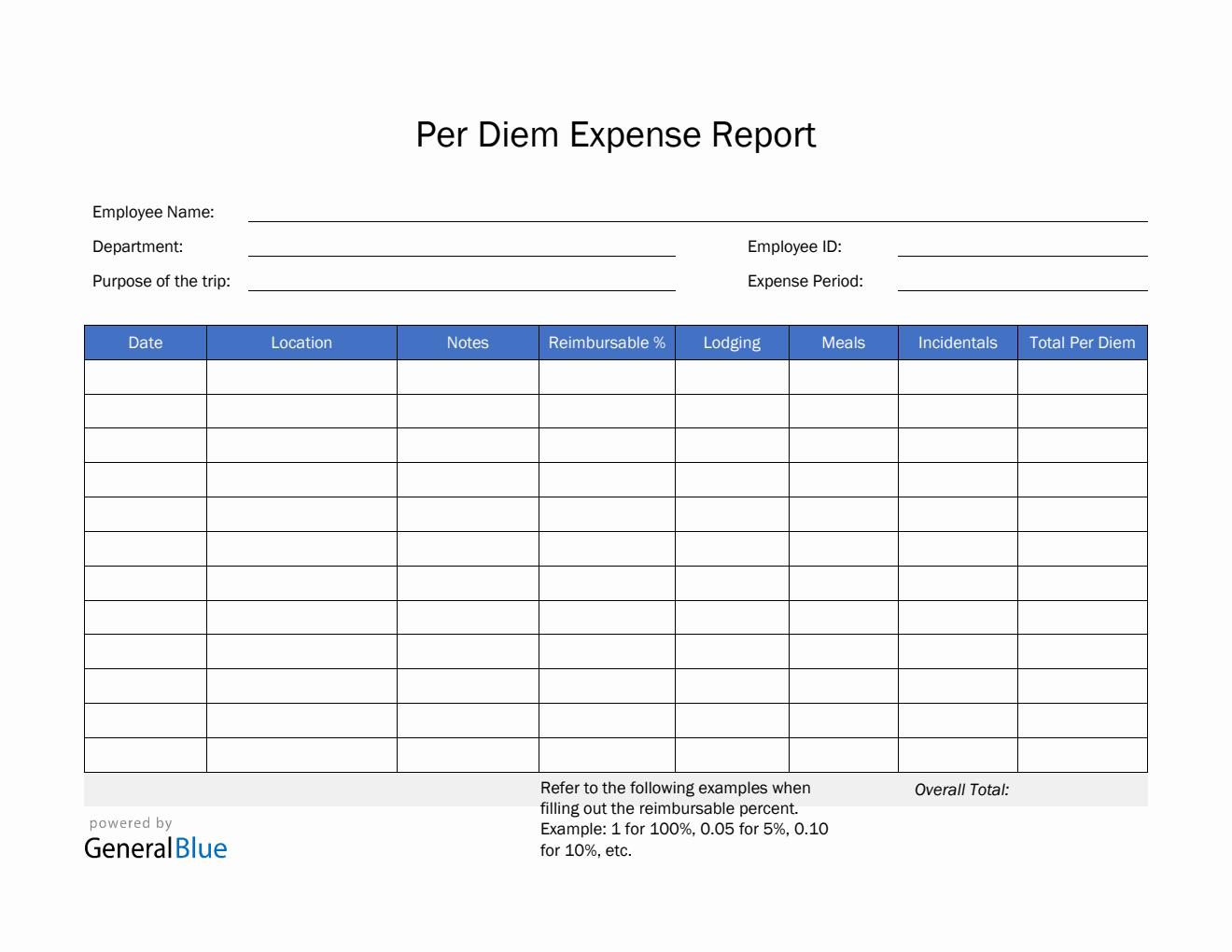
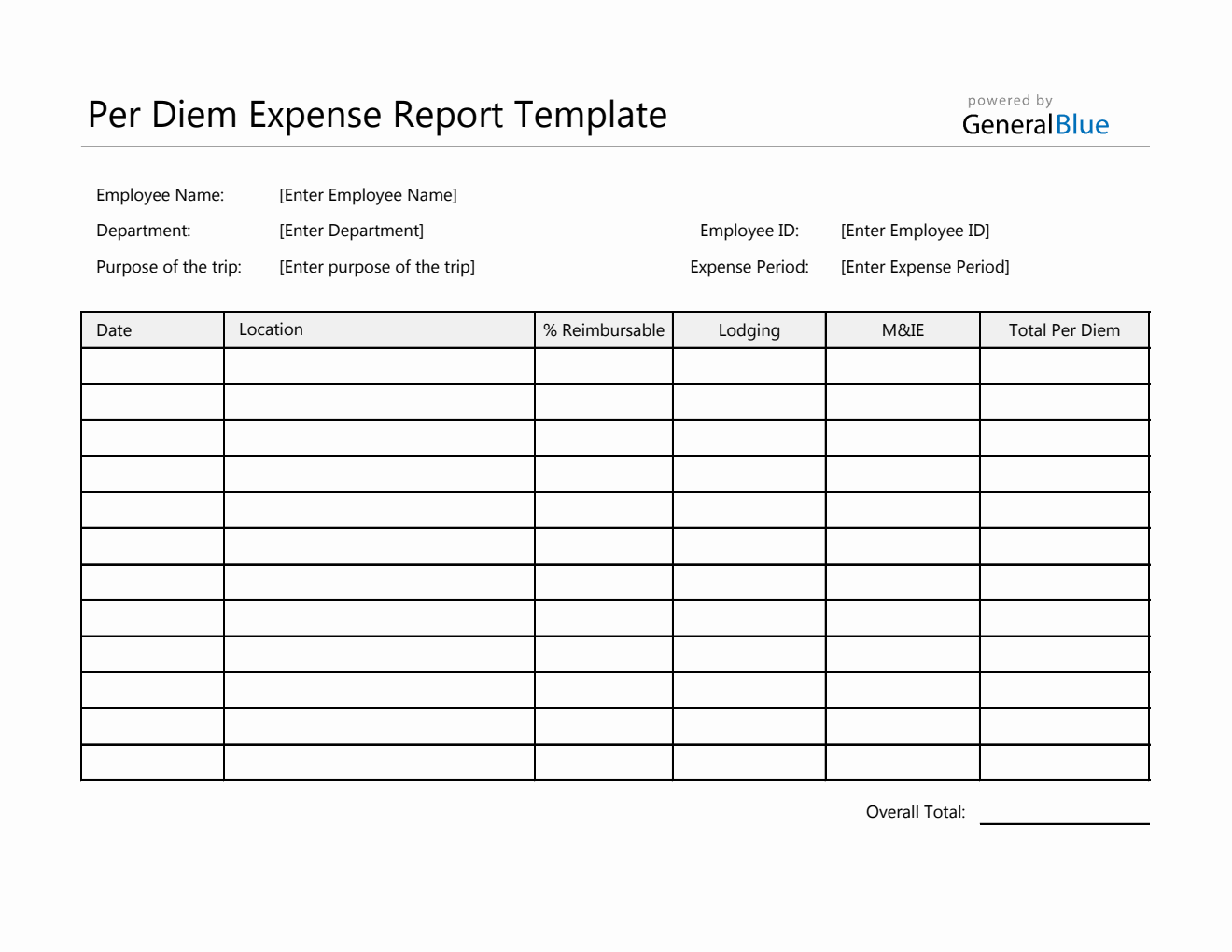
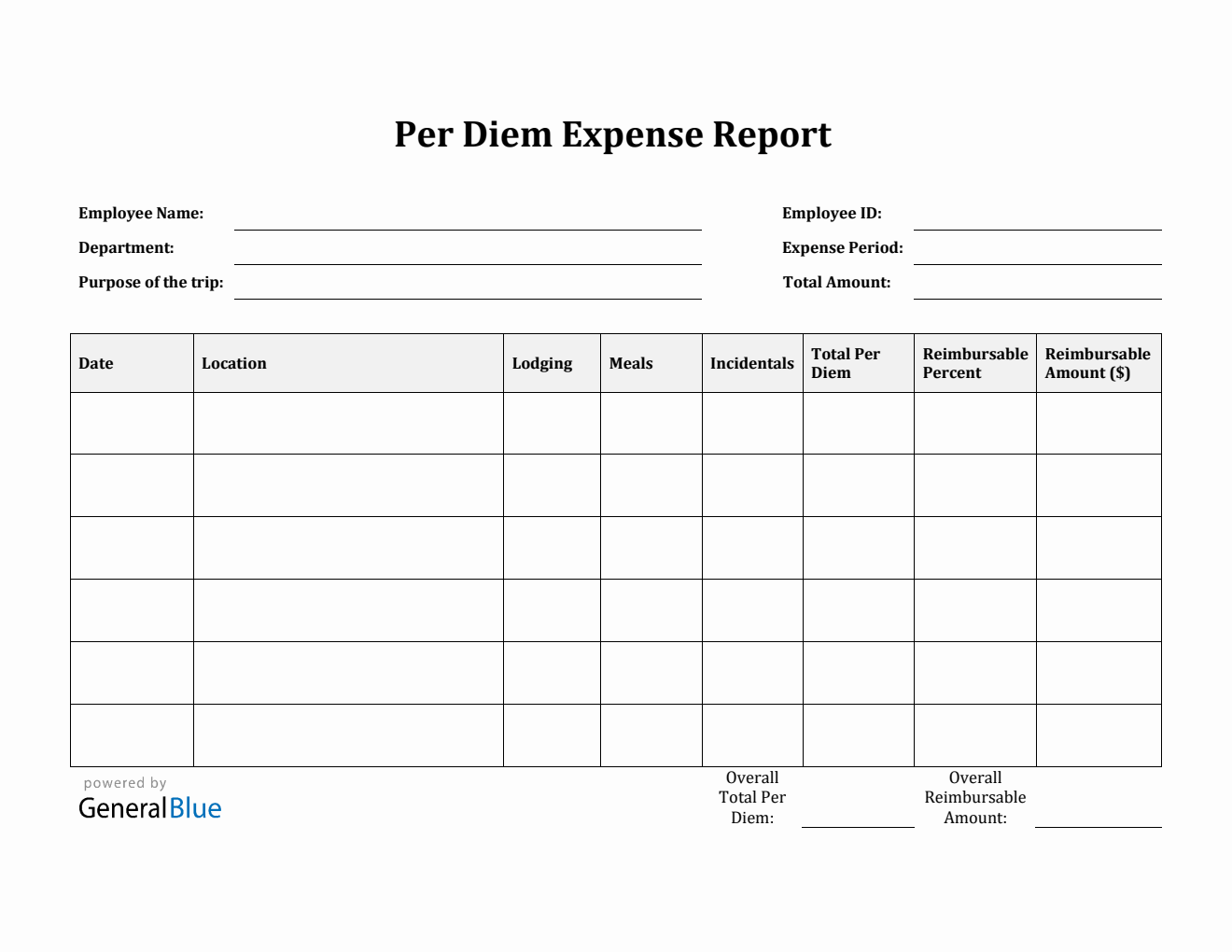
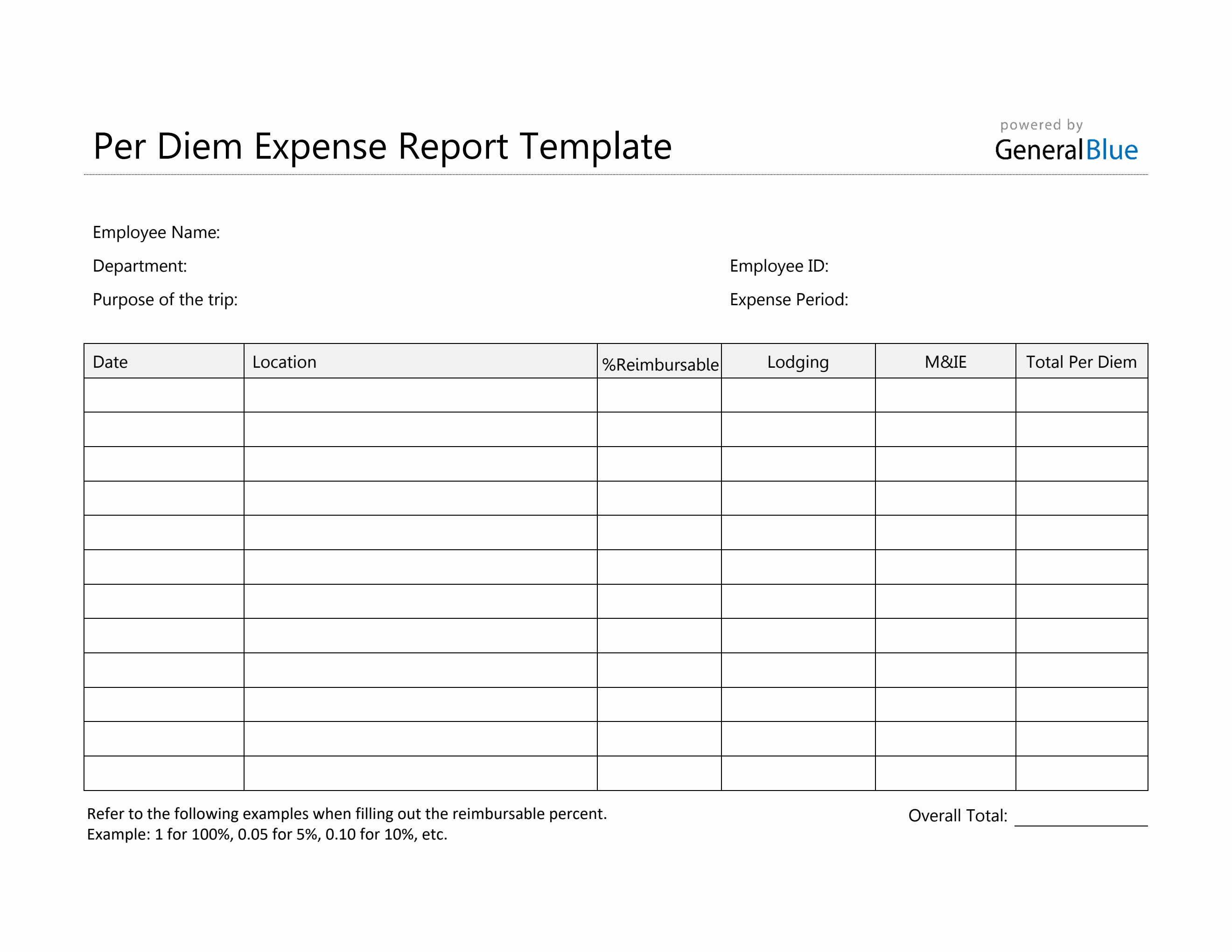
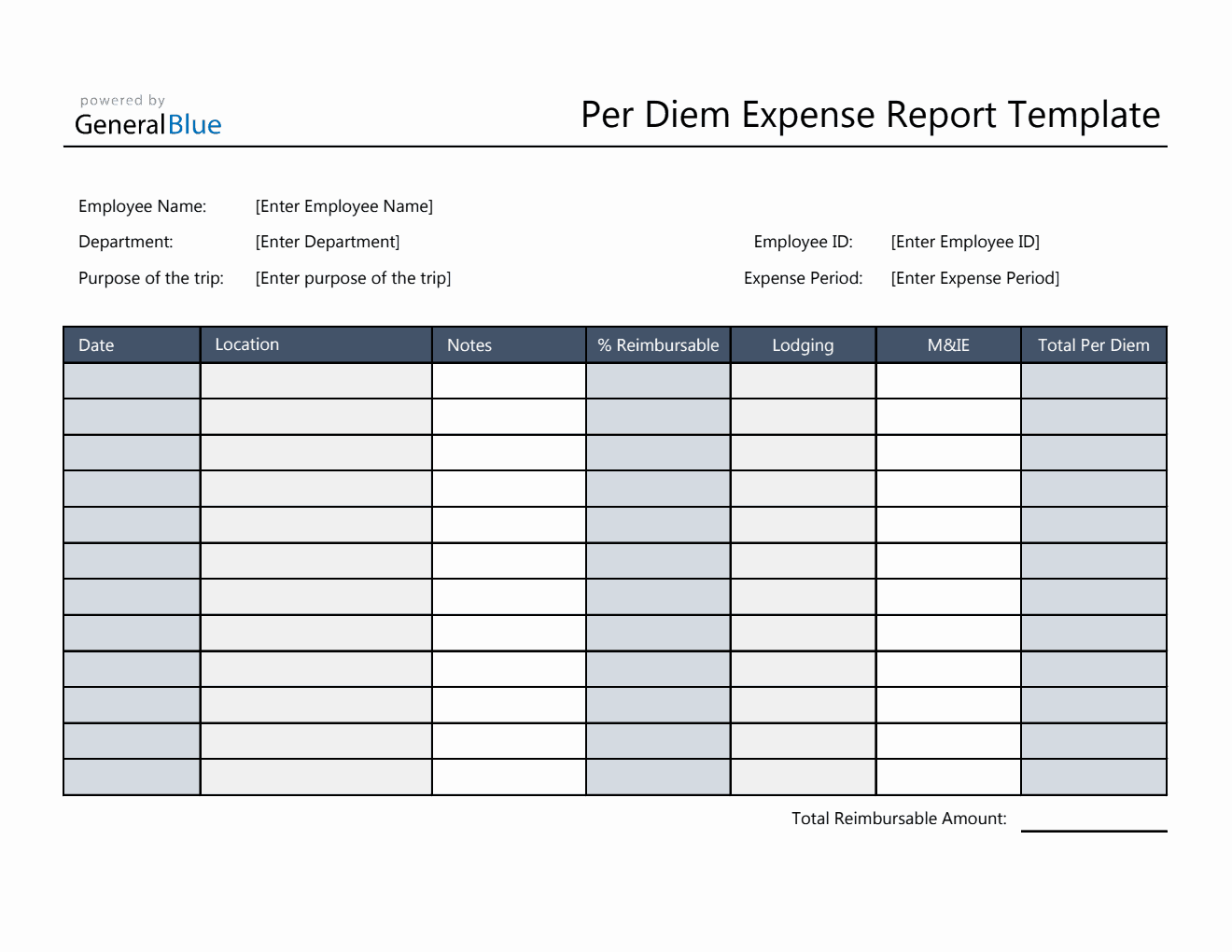
This is the heart of the per diem report. A table or grid format works best to log expenses for each day of travel in a structured manner. The columns should include:
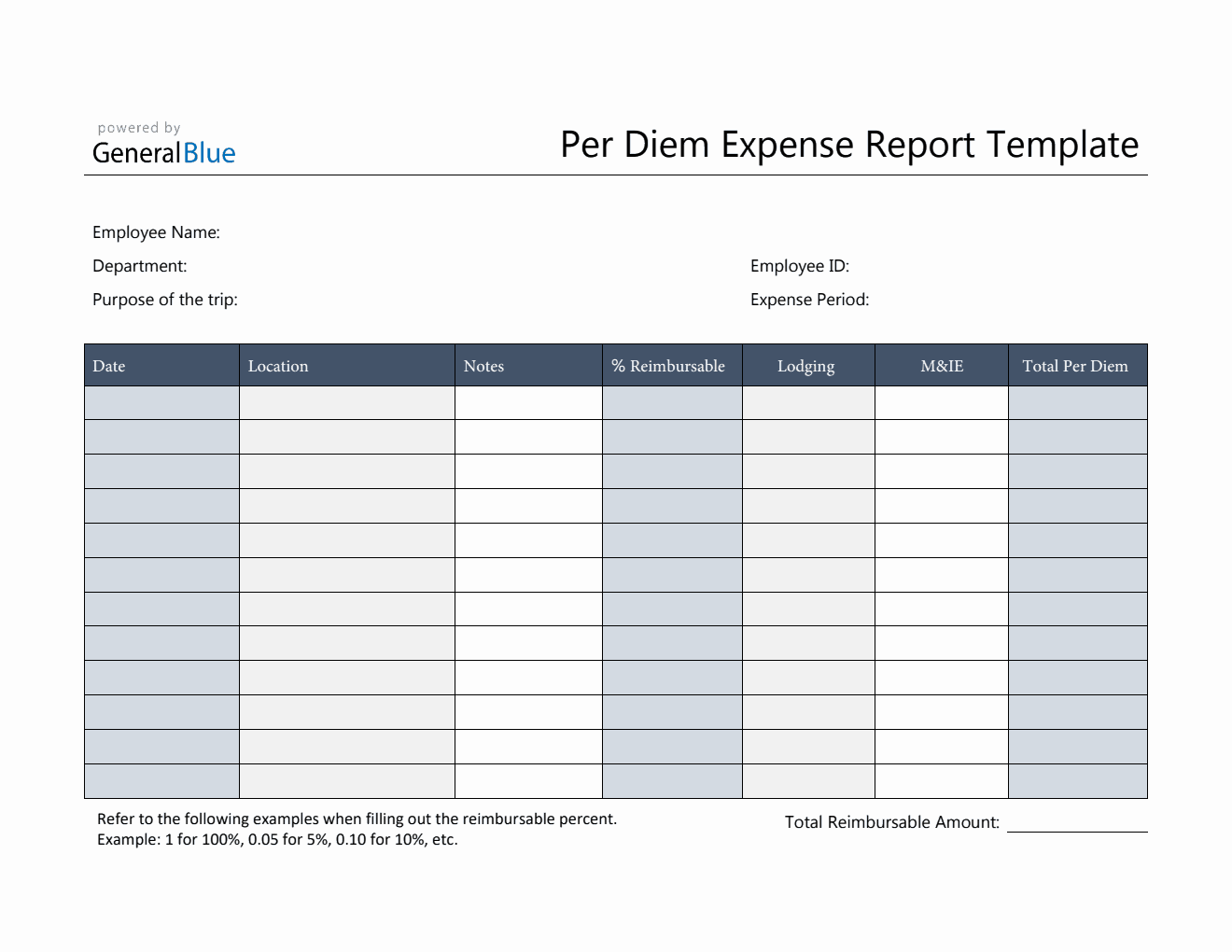
- Date: The specific day of travel.
- Location: The city and state where the employee spent the night.
- Lodging Rate: The applicable per diem rate for lodging for that location.
- M&IE Rate: The applicable Meals and Incidental Expenses rate for that location.
- Daily Total: The sum of the Lodging and M&IE rates for that day.
- Notes: An optional field for any relevant comments, such as noting a provided meal.
Partial Day Travel Calculations
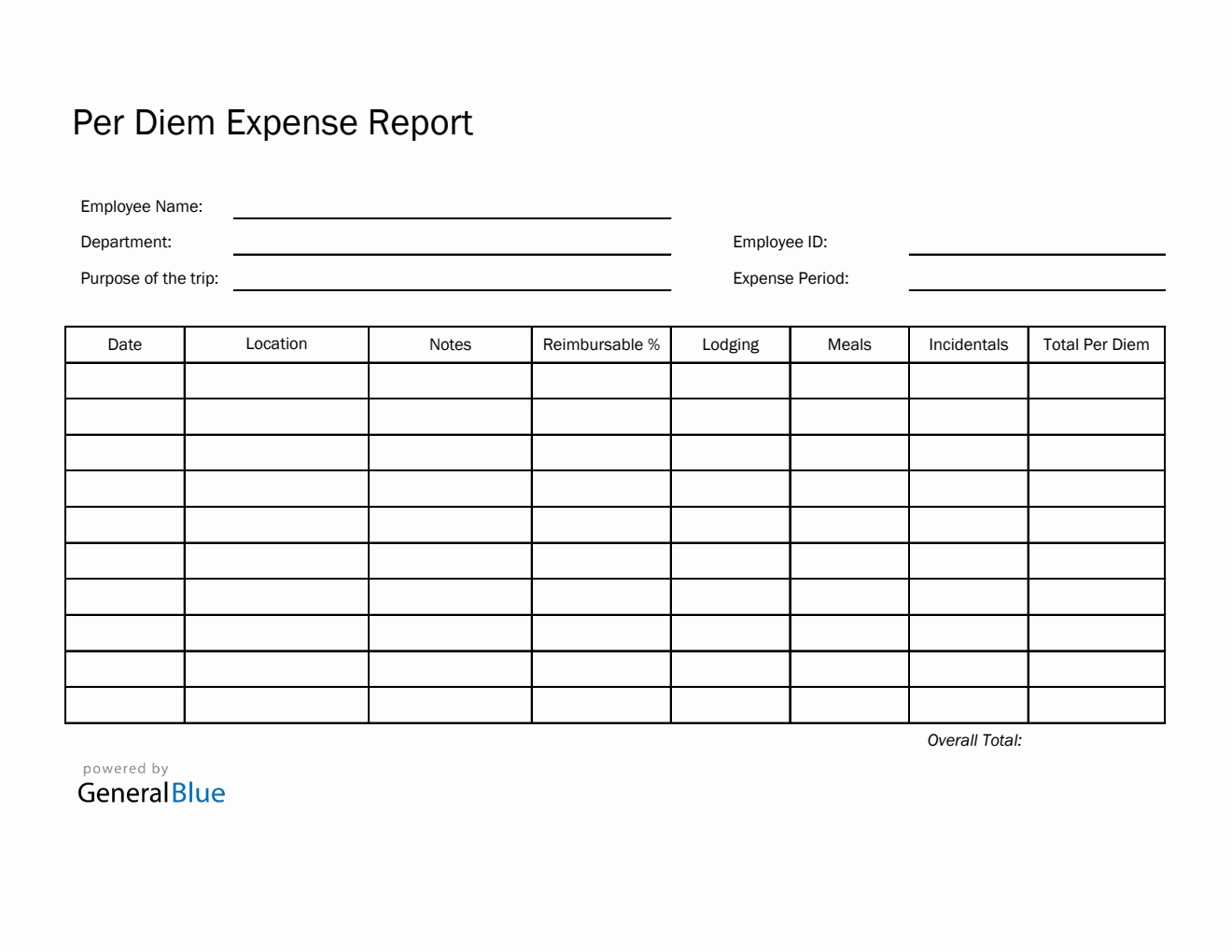
The first and last days of a trip are rarely full 24-hour periods. The GSA and most company policies account for this by reimbursing these travel days at a reduced rate. The standard practice is to apply 75% of the M&IE rate for the first and last day of travel. Your template should have a clear way to calculate and display this adjustment to prevent confusion and errors. This might be a separate line item or an automated calculation if you are using a spreadsheet with formulas.
Adjustments and Deductions
Not all expenses during a trip are covered by the per diem allowance. This section accounts for costs that should be removed from the final claim.
- Company-Paid Expenses: If the company paid for the employee's hotel directly with a corporate card, the lodging amount should not be claimed.
- Provided Meals: If a conference, client, or the company provides a meal (e.g., a complimentary breakfast at the hotel or a catered lunch at a meeting), the value of that meal should be deducted from the M&IE per diem for that day. The template should have a simple way to check off or enter the number of provided meals per day.
Totals and Summaries
After all daily expenses and adjustments are logged, a clear summary section is needed to finalize the reimbursement amount.
- Total Per Diem Claim: The sum of all daily per diem totals.
- Less Cash Advance: A field to subtract any cash advance the employee received before the trip.
- Total Reimbursement Due: The final amount owed to the employee. This should be a prominent, easy-to-find figure.
Signatures and Approvals
To complete the workflow, the template needs designated areas for authorization. This formalizes the submission and approval process.
- Employee Signature and Date: The employee's confirmation that the information is accurate.
- Manager/Approver Signature and Date: The manager's confirmation that the expense is approved for payment.
How to Use a Per Diem Expense Report Template for Maximum Efficiency
Having a great template is only half the battle. Knowing how to use it correctly—both as an employee submitting a report and as a manager approving it—is key to unlocking its full potential for efficiency and accuracy.
Step-by-Step Guide for Employees
- Obtain the Official Template: Always start with the most current version of your company's Per Diem Expense Report Template. Avoid using old files saved on your computer, as policies or formats may have changed.
- Complete the Header Information: Fill out your name, employee ID, department, and all trip details (purpose, destinations, dates, and times) accurately.
- Determine the Correct Per Diem Rates: Use the GSA's official website to look up the rates for your travel destination(s). Pay close attention to the effective dates to ensure you are using the rates for the correct fiscal year. If your trip spans multiple locations in one day, the rate is determined by where you spend the night.
- Log Each Day: Fill out the daily breakdown table. For each day of your trip, enter the date, location, and the corresponding lodging and M&IE rates.
- Calculate Partial Days: For your first and last day of travel, apply the 75% rule to the M&IE portion of your per diem. Most templates will do this automatically, but it's good practice to double-check the calculation.
- Deduct Provided Meals: Honestly report any meals that were provided to you at no cost, such as a conference lunch or a client dinner. Your company policy will specify the amount to deduct for each meal.
- Review and Verify: Before submitting, carefully review the entire report. Check your math, ensure dates are correct, and confirm you've used the right rates. A few minutes of review can prevent delays in your reimbursement.
- Sign and Submit: Once you are confident the report is accurate, sign and date it. Submit it to your manager for approval through the proper channels, attaching any required documentation like a hotel folio (even if lodging is per diem, it serves as proof of travel).
Tips for Managers and Administrators
- Provide Clear Guidance: Ensure employees know where to find the template and have clear instructions on how to complete it. A brief training session or a simple instruction sheet can prevent most common errors.
- Verify Key Details: When reviewing a submitted report, quickly verify the core information. Do the travel dates and destinations match the approved travel request?
- Spot-Check Per Diem Rates: You don't need to check every single rate, but it's wise to spot-check a day or two against the GSA website, especially for less common destinations. This helps ensure accuracy and deters misreporting.
- Check for Common Errors: Be on the lookout for frequent mistakes, such as incorrect calculations for partial travel days or forgetting to deduct provided meals.
- Ensure Prompt Processing: Once you have approved a report, forward it to the accounting or payroll department immediately. Timely reimbursement is crucial for employee morale and financial well-being.
The Benefits of Standardizing Your Per Diem Reporting
Adopting a standardized template for per diem expenses isn't just about creating neater paperwork. It's a strategic decision that delivers tangible benefits across the organization, from the traveling employee to the finance department.
For the Employee
- Simplicity and Predictability: Employees know exactly what they will be reimbursed, removing the financial uncertainty of travel. They don't have to worry about whether a meal was too expensive or if they lost a small receipt.
- Reduced Administrative Work: The biggest advantage is the elimination of receipt hoarding. Employees save significant time and effort both during and after their trip by not having to track, save, and itemize every minor purchase.
- Faster Reimbursements: A clean, standardized report is much faster for managers and accounting teams to review and approve. This means the money gets back into the employee's bank account more quickly.
For the Employer
- Streamlined Approval Workflows: When all reports look the same, managers can review them faster and with greater confidence. They know exactly where to find key information, making the approval process a matter of minutes, not hours.
- Enhanced Policy Compliance: A template can be designed to enforce company policy. By structuring the report in a specific way, you guide employees to claim expenses correctly and in accordance with established rules.
- Improved Budgeting and Forecasting: Per diem rates are fixed, which allows finance teams to accurately forecast the cost of business travel. This predictability is invaluable for financial planning and budget management.
- Reduced Administrative Costs: The time your finance and accounting teams save by not having to chase down missing information, decipher messy reports, or process hundreds of tiny receipts translates directly into lower administrative costs.
For Compliance and Auditing
- Creates a Clear Audit Trail: Standardized reports provide a consistent, easy-to-follow record of travel expenses. In the event of an internal or external audit (such as by the IRS), having clean, uniform documentation is critical.
- Ensures IRS Compliance: The per diem method is considered an "accountable plan" by the IRS, meaning reimbursements are not taxed as income, provided the rules are followed. A proper template ensures you collect the necessary information (date, place, and business purpose) to meet IRS requirements.
Common Pitfalls to Avoid with Per Diem Expenses
While the per diem system is designed for simplicity, there are a few common mistakes that can lead to inaccurate reimbursements, compliance issues, or delays. Being aware of these pitfalls can help both employees and approvers ensure a smooth process.
Using Outdated Rates
Per diem rates are typically updated annually by the GSA. Using rates from a previous year is one of the most frequent errors. This can lead to either underpaying or overpaying an employee. Always use the GSA's official website to look up the rates that are effective for the actual dates of travel.
Miscalculating First and Last Day Travel
The 75% M&IE rule for the first and last days of travel is a standard but often misunderstood calculation. Some employees may mistakenly claim 100% for these days. A good template should automate this calculation or provide a very clear instruction, and managers should be trained to look for this specific error during their review.
Forgetting to Deduct Provided Meals
If an employee attends a conference where lunch is provided or has a dinner paid for by a client, the M&IE allowance for that day must be reduced. Failing to do so is essentially "double-dipping" and can be a violation of company policy. Employees should be trained to be diligent about reporting these provided meals, and the expense report template should make it easy to do so.
Mixing Per Diem with Actual Expenses
Company policy should clearly state that a trip is reimbursed using either the per diem method or the actual expense method—not a mix of both for the same expense type. For example, an employee should not claim the M&IE per diem and also submit a receipt for an expensive dinner on the same day. The only common exception is lodging, where some companies might reimburse the actual hotel cost (up to the GSA lodging per diem max) while using the M&IE per diem for meals. This should be explicitly defined in your travel policy.
Conclusion
A well-structured Per Diem Expense Report Template is more than just a document; it is a cornerstone of an efficient and compliant travel expense management system. It transforms a potentially chaotic and time-consuming process into a simple, predictable, and streamlined workflow. By providing a clear and consistent format, companies empower their employees to report expenses accurately and with minimal effort, while equipping finance and management teams with the tools they need for fast approvals and precise financial oversight.
The benefits are clear and far-reaching. For employees, it means less time spent collecting receipts and more time focusing on the purpose of their trip, all while enjoying faster and more predictable reimbursements. For the organization, it translates to reduced administrative overhead, improved compliance with both internal policies and IRS regulations, and more accurate budget forecasting.
Whether you choose a simple spreadsheet or invest in a specialized expense management software, the principles remain the same. By incorporating the key components discussed—clear trip details, a structured daily breakdown, and proper handling of calculations and approvals—you can create a robust system that serves everyone's needs. Ultimately, implementing a standardized per diem reporting process is a simple investment that pays significant dividends in time, accuracy, and employee satisfaction.
0 Response to "Per Diem Expense Report Template"
Posting Komentar